Can’t find what you’re looking for? Call our top-tier Customer Service team to help locate your part.
Can’t find what you’re looking for? Call our top-tier Customer Service team to help locate your part.
Free Shipping
Buy Now, Pay Later
Guaranteed Fit
American Owned
Lifetime Warranty
U.S. Based support
Gauges play a vital role in keeping your vehicle performing safely and efficiently. Whether monitoring fuel pressure, oil levels, or temperature, gauges give real-time data that helps you make informed decisions on the road or at the track. Understanding how they work, what types exist, and how to identify failing gauges is key to reliable vehicle operation.

Gauges are precision instruments that measure and display information about a vehicle’s operating systems. They track details such as fuel pressure, oil temperature, and boost levels to help drivers maintain performance and safety. Every gauge provides insights that alert you to potential issues before they turn into major repairs, keeping your vehicle running at its best.

There are several types of gauges available for different applications. Common options include fuel pressure gauges, oil pressure gauges, temperature gauges, and voltmeters. Performance vehicles may also feature boost or air-fuel ratio gauges for more advanced monitoring. Choosing the right combination of gauges ensures your vehicle operates efficiently and that vital systems remain under control.

A malfunctioning gauge can show inaccurate readings or stop responding entirely. Symptoms often include flickering needles, inconsistent readings, or warning lights that appear without cause. In some cases, wiring faults or sensor failures may be the source. Addressing these problems early helps prevent misdiagnoses and protects other components in your fuel or electrical systems.
Selecting the proper gauges starts with understanding your vehicle’s needs and setup. Consider what data is most critical for your driving style and environment. From basic factory-style replacements to advanced performance gauges, the goal is to find instruments that deliver accurate readings and integrate smoothly with your existing systems for dependable performance.

OEM replacement gauges are ideal for maintaining factory accuracy and reliability, while performance upgrades offer greater precision and customization. Upgraded gauges often feature enhanced sensors, improved visibility, and faster response times. Whether restoring a daily driver or tuning a race car, the choice depends on your priorities for accuracy, design, and overall functionality.
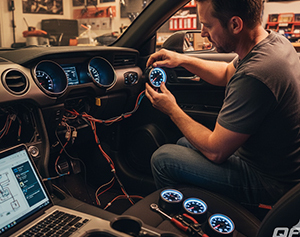
Compatibility is one of the most important factors when selecting new gauges. Always verify that your chosen gauge matches your vehicle’s year, make, and model. Fitment also includes electrical connections, sensor types, and mounting options. Ensuring proper compatibility helps avoid installation challenges and guarantees reliable data transmission between your sensors and displays.
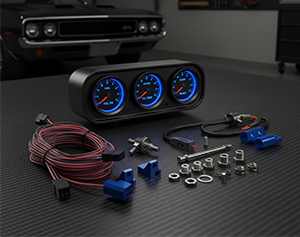
A gauge assembly combines multiple measurement tools into one integrated unit. These assemblies simplify installation by offering matched sensors, wiring harnesses, and mounting hardware designed for a specific vehicle. Many drivers prefer complete assemblies because they reduce setup time and ensure consistent readings across all critical systems. They’re ideal for both factory and custom applications.
Proper installation and regular maintenance extend the life of your gauges and improve accuracy. Follow manufacturer instructions closely, check connections during installation, and perform periodic inspections. Simple habits like cleaning electrical contacts and calibrating sensors help avoid false readings and maintain long-term reliability, especially in performance or off-road environments.

Before beginning installation, disconnect the battery and gather the necessary tools. Mount the gauge securely in a visible location and route wiring away from heat sources and moving parts. For mechanical gauges, confirm that fittings are properly sealed to prevent leaks. Taking your time ensures precision and helps avoid electrical or fuel system issues.
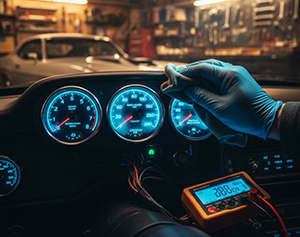
Routine maintenance keeps your gauges operating at peak performance. Check all connections regularly, ensure sensors remain clean, and inspect for any signs of corrosion. If a gauge becomes foggy or slow to respond, recalibrate it or verify sensor function. These quick checks prevent data errors and preserve both safety and accuracy.
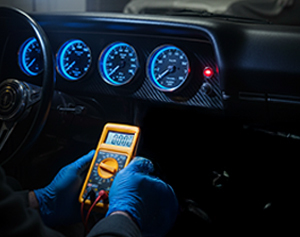
Common gauge problems include inaccurate readings, power loss, or fluctuating signals. Start by checking fuses, ground wires, and connectors. If the gauge still fails, inspect the sender unit or related wiring for damage. Replacing faulty sensors or connectors often resolves most issues and restores proper functionality without needing a complete gauge replacement.
Upgrading your gauges not only improves monitoring but also enhances overall performance. Modern gauges deliver faster, more precise readings and integrate easily with advanced fuel and ignition systems. They give you the confidence to push your vehicle harder while maintaining control over vital performance metrics like pressure, flow, and temperature.

Performance gauges use advanced sensors and digital displays for improved accuracy under demanding conditions. They provide detailed insights that help you fine-tune your setup for better efficiency and power output. Whether you prefer analog or digital styles, quality gauges from trusted brands ensure dependable performance and long-term durability.
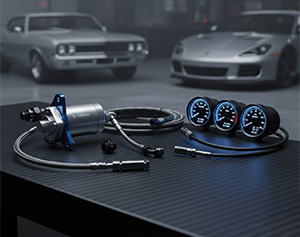
fuel pumps and gauges work hand in hand to manage your vehicle’s fuel delivery system. A high-performance pump maintains consistent pressure, while an accurate gauge monitors that pressure in real time. Upgrading both components together ensures your engine receives steady fuel flow and helps prevent issues such as fuel starvation or lean conditions.
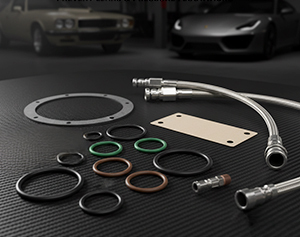
Supporting components like O-rings, tank seals, and fuel lines are vital for a leak-free system. Replacing worn parts prevents fuel vapor loss and pressure fluctuations that can affect gauge readings. High-quality materials designed for modern fuels, including ethanol blends, help ensure lasting performance and reliability under various driving conditions.
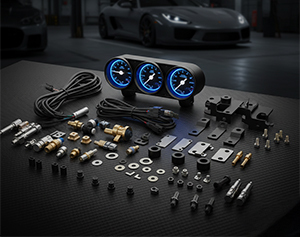
Comprehensive gauge kits include everything needed for a seamless upgrade. They combine matched sensors, wiring harnesses, and mounting hardware to simplify installation and calibration. These kits are ideal for enthusiasts who want a complete solution that delivers professional results with minimal setup time, ensuring consistent and accurate performance monitoring.
Quantum carries a variety of gauges, including fuel pressure gauges, air-fuel ratio gauges, and fuel gauges. These gauges help monitor your vehicle’s fuel system performance and ensure optimal engine tuning.
Yes, many fuel pressure gauges are designed for easy installation, especially if you choose an inline fuel pressure gauge. However, if you're unfamiliar with fuel system components, it’s recommended to consult a professional for installation.
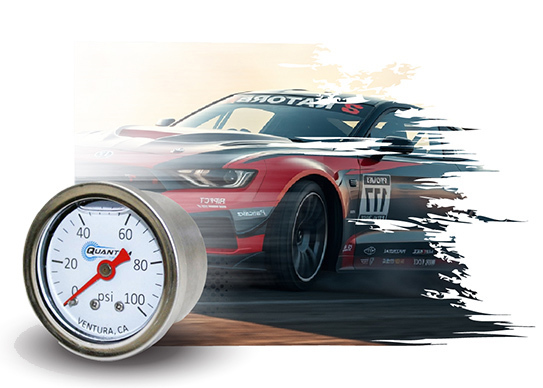
A fuel pressure gauge measures the pressure in your fuel system, helping to ensure that your fuel pump and injectors are delivering the correct amount of fuel. Monitoring fuel pressure is critical for preventing performance issues like running too lean or too rich.
To choose the correct fuel gauge, consider your vehicle’s fuel system specifications and the type of fuel reading (electronic or mechanical) you prefer. Quantum Fuel Systems offers a variety of options to suit different applications, from stock vehicles to high-performance builds.
An inline fuel pressure gauge is installed directly in the fuel line, allowing you to monitor fuel pressure in real-time. It’s commonly used in high-performance or modified vehicles to ensure consistent fuel delivery and avoid pressure drops under load.
If your fuel gauge is reading inaccurately or not responding at all, it might indicate a faulty fuel gauge sensor. Replacing the sensor can restore proper fuel level readings and help you avoid running out of fuel unexpectedly.
An air-fuel ratio gauge monitors the ratio of air to fuel in your engine’s combustion process. It’s essential for tuning performance vehicles, as maintaining the correct air-fuel ratio ensures optimal power, fuel efficiency, and engine longevity.
Quantum Fuel Systems offers a wide range of gauges to meet your automotive and powersports needs, including fuel pressure gauges, air/fuel ratio gauges, inline fuel pressure gauges, and fuel gauge sensors. Our selection features top-quality products from trusted brands like Quantum, AEM, Innovate, and Autometer. Whether you're upgrading your system or replacing essential components, you'll find the right gauge for your application. We stock most third-party items in-house, allowing us to provide same-day free shipping on orders over $70. For items we dropship directly from the manufacturer, we ensure quick and attentive service. Trust Quantum for all your gauge needs and enjoy reliable performance and fast delivery.


QFS was born from a desire for freedom: the freedom to keep your ATV, dirt bike, car, or truck running with dependable, OEM-quality, and affordable fuel systems. We want you back on the road without breaking the bank. Skip the costly dealership—our replacement parts ship directly to you and are easy to install. Enjoy OEM performance with unbeatable US-based support and a lifetime warranty. Are you with us?

